Guide
Alexandrite versus diode
Two wavelengths, two trade-offs. Alexandrite at 755 nanometres is faster and more effective on lighter skin; diode at around 810 is slower, more forgiving, and far more common. The question is which one suits your skin, not which one is better.
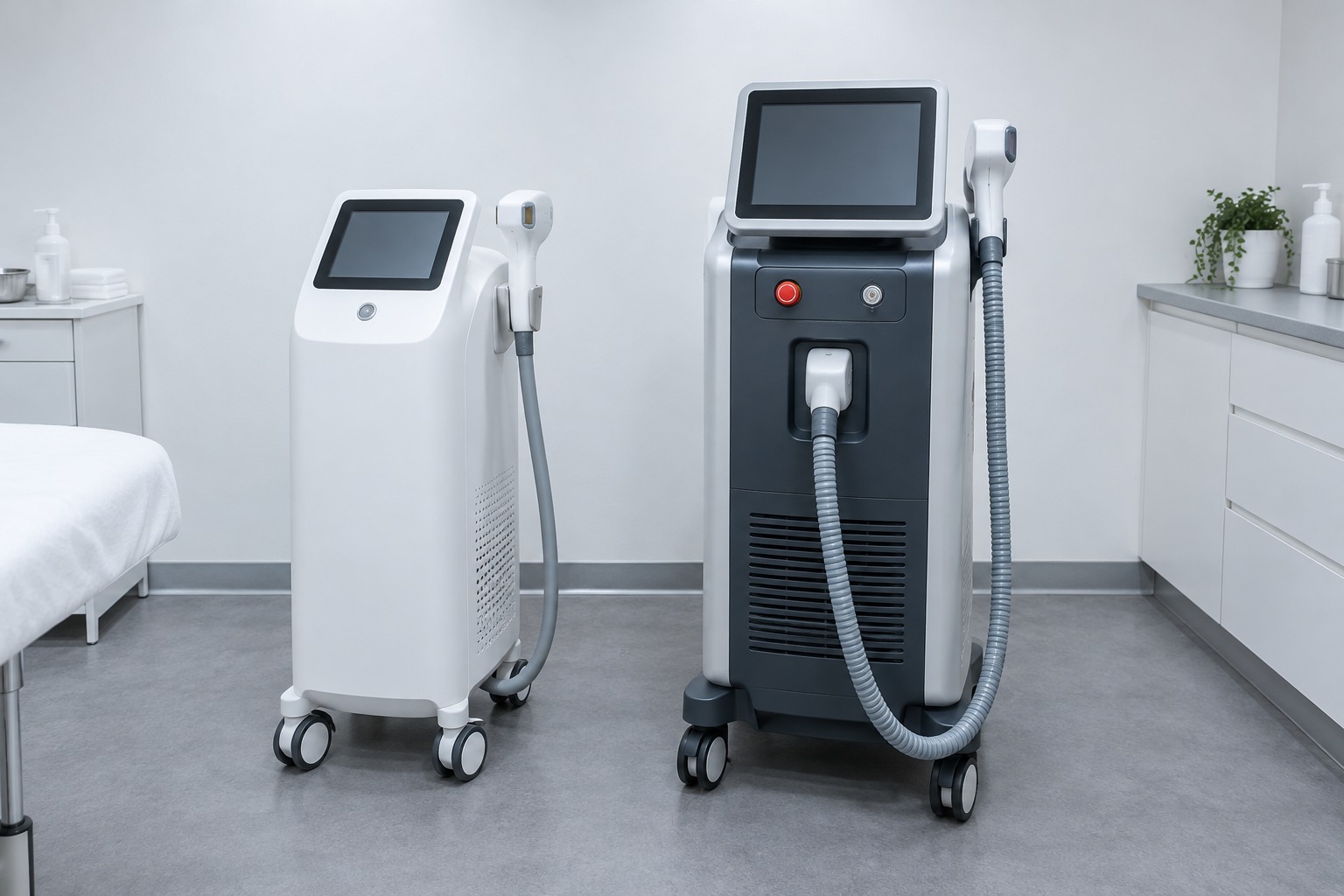
The difference in one sentence
Alexandrite light at 755 nanometres is absorbed more strongly by melanin, which makes it more effective per pulse and faster in the room, and also more likely to heat skin that has melanin in it. Diode at 800 to 810 nanometres sits slightly further from the peak melanin absorption, which costs some efficiency and buys tolerance.
Who each device suits
Alexandrite is at its best on light to medium skin with dark, coarse hair, where the contrast between hair and skin is high and the extra absorption lands where you want it. It is fast, which is why full legs and backs on suitable skin are often done on alexandrite.
Diode covers a wider range including medium and some darker tones, and it is the device most medspas own because it is versatile and the consumable cost per session is lower. Older diode devices are noticeably slower and less comfortable than current ones, so "diode" on a treatment menu tells you less than the model number does.
Speed, pain and the honest trade-off
Alexandrite sessions are typically quicker for the same area, and the sensation is often described as sharper. Diode sessions take longer and tend to feel more like sustained heat. Neither is painless. If a clinic offers you the faster device, ask whether the settings are being chosen for your result or for their schedule.
The question that matters more than the device name
Ask which model, and who will operate it, and how they chose the settings for your skin tone. A current diode operated by someone who adjusts fluence and pulse duration to your response will beat an alexandrite run on a default setting. The device sets the ceiling; the operator decides where you land under it.
What about Nd:YAG
If your skin is darker, 1064 nanometres is usually the safer starting point because it largely bypasses melanin in the skin. Some clinics combine wavelengths across a course, starting conservatively and adding a second device once they have seen how your skin behaves. That is a reasonable protocol and worth asking about directly.
Where this sits in the rest of the site
If you are choosing a clinic rather than reading up, start with how the treatment works and what drives the price, then compare the markets we cover and what we verify before you book anything.
Wavelength behaviour and device selection reflect standard practice in laser hair reduction. Device availability varies by clinic. This is not medical advice.