The topic
Laser hair removal: what it is, what drives the price, how to compare
Laser hair removal is a series of treatments that damage the follicle so hair grows back thinner and slower, and for most people stops. It takes several sessions, not one. The price you are quoted varies by a factor of three across a single city for reasons that have almost nothing to do with the result.
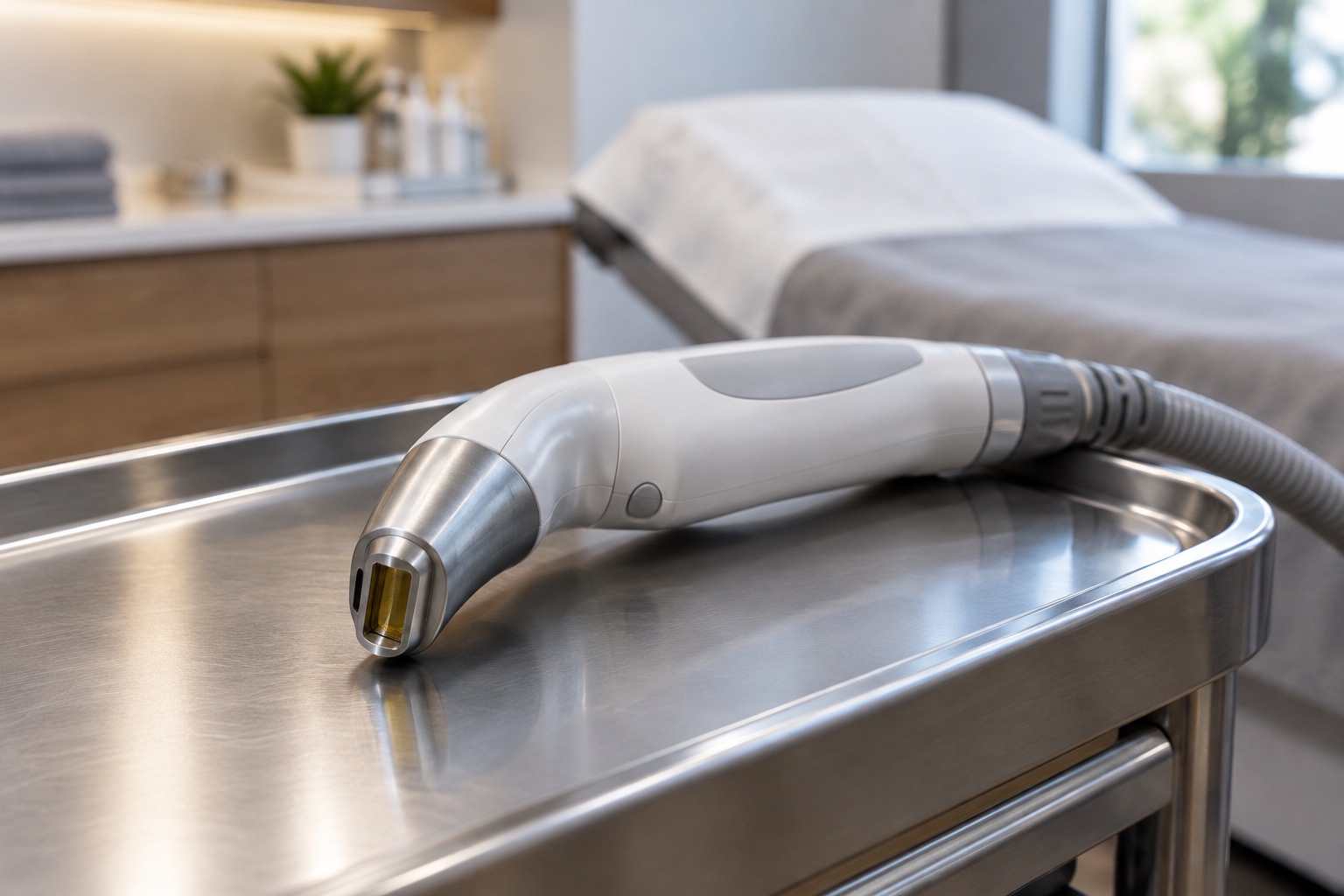
What actually happens in a session
A technician or clinician presses a handheld device against the skin and fires a pulse of light. The light is absorbed by melanin in the hair shaft, which heats the follicle and damages it while the pigment absorbs the energy. That is why contrast matters: the treatment works best where hair is dark and skin is not. A session on the underarms takes about ten minutes. A full set of legs takes forty five.
You will need more than one session because hair grows in cycles. Only follicles in the active growth phase respond, and at any moment a large share of them are not. Six to eight sessions spaced four to six weeks apart is the usual course for the face, six to ten elsewhere, with a touch up once or twice a year after that. Anyone promising permanent removal in two visits is describing a different outcome than the one the evidence supports.
The four devices you will be quoted for, and what each is for
"Laser" is not one machine. The wavelength decides who the device suits, and it is the single most useful question you can ask a clinic before booking.
| Device | Wavelength | Best suited to | Watch out for |
|---|---|---|---|
| Alexandrite | 755 nm | Light to medium skin, dark hair. Fastest and most effective for most patients. | Not safe on darker skin tones without care; the melanin competition raises burn risk. |
| Diode | 800 to 810 nm | The widest range, including medium and some darker tones. Most common in medspas. | Slower than alexandrite. Quality varies enormously between device generations. |
| Nd:YAG | 1064 nm | Darker skin tones. The safest long wavelength option. | Less effective on fine or light hair, and requires more sessions. |
| Ruby | 694 nm | Very light skin, fine dark hair. | Largely superseded. Rare outside older clinics. |
What drives the price
Five things, in rough order of how much they move the number. None of them is "quality" in the abstract.
- Body area and time. A session is priced on machine time. Underarms are ten minutes; a full back is forty.
- The device. An alexandrite or a current generation diode costs the clinic more per hour than an older diode.
- Who holds it. A dermatologist's hour is priced differently from an esthetician's, and state rules decide who is allowed to operate at all.
- Packaging. A single session quoted at $180 and a package of six at $780 are different products. Compare the total, not the headline.
- Rent. Two clinics four blocks apart can differ by 40% on the same machine because one of them is on the main street.
This is why a "cost" page that publishes one national range is close to useless. The useful number is what clinics in your city charge this month, for the area you want, on the device that suits your skin. That is the number this site exists to collect.
Who may legally operate a laser
Supervision requirements are set by each state's medical board, and they differ: some states require physician supervision for every treatment, others let a licensed esthetician operate independently after training. We are not going to publish a summary we have not read the rule for. When a state page goes live on this site, it cites the board's own text.
How to compare two quotes in five minutes
Ask both clinics the same four questions, in writing: which device and model, who will operate it and what is their licence, what a package of six costs including consultation and numbing, and what the policy is if you miss a session. Any clinic that will not answer one of those in writing has told you something useful.
What the price data says
We checked 60 provider websites across three markets and recorded every price they published: per-session prices and what they include, and what six-session packages cost and what discount they really give. Both pages name the clinic and link to the page the price came from.
Guides worth reading before you book
- Is it permanent
- How many sessions you need
- Alexandrite versus diode
- Nd:YAG for darker skin
- At-home devices versus a clinic
- Why prices differ between clinics
- How to read a quote
- How the treatment works
Where we are publishing first
Three markets are open, chosen because the incumbent sites there are small and the local competition is thin: Baton Rouge, Wichita and Little Rock. Each page lists every provider we could verify, with phone and address. Prices for these markets are being collected by phone now and will be added when confirmed, not estimated.
Questions people ask before booking
Is laser hair removal permanent?
It is long lasting rather than permanent. Most people see 70 to 90 percent reduction after a full course and need a touch up once or twice a year. Hormonal changes, pregnancy and some conditions can bring hair back.
Does it hurt?
It feels like a warm snap against the skin. Modern devices cool the surface as they fire. Underarms and bikini are more sensitive than legs or back. Most clinics offer numbing cream for the first session.
How many sessions will I need?
Typically six to eight for the face and six to ten elsewhere, spaced four to six weeks. The number depends on hair colour, skin tone, hormones and how consistently you keep the schedule.
Can I have it on dark skin?
Yes, with the right device. Nd:YAG at 1064 nm is the safest wavelength for darker tones because it bypasses the melanin in the skin. A clinic that offers only alexandrite and does not ask about your skin tone is a clinic to skip.
Why is the same treatment three times the price across town?
Machine time, device generation, who operates it, packaging and rent. It is rarely the result. Comparing the package total and the device is the only fair comparison.
Who can legally perform laser hair removal?
It depends on the state and it changes. Check the state medical board's rule for the state the clinic is in, and ask the clinic who will be holding the device.
Device wavelengths and session guidance reflect standard clinical practice for hair reduction. This page is not medical advice. Judgement about your skin belongs with a licensed clinician.