Guide
How does laser hair removal work
A laser does not remove hair. It damages the structure that grows it, and only when that structure is in the right phase of its cycle. Everything else about the treatment, including why you need six sessions and why some hair survives, follows from those two facts.
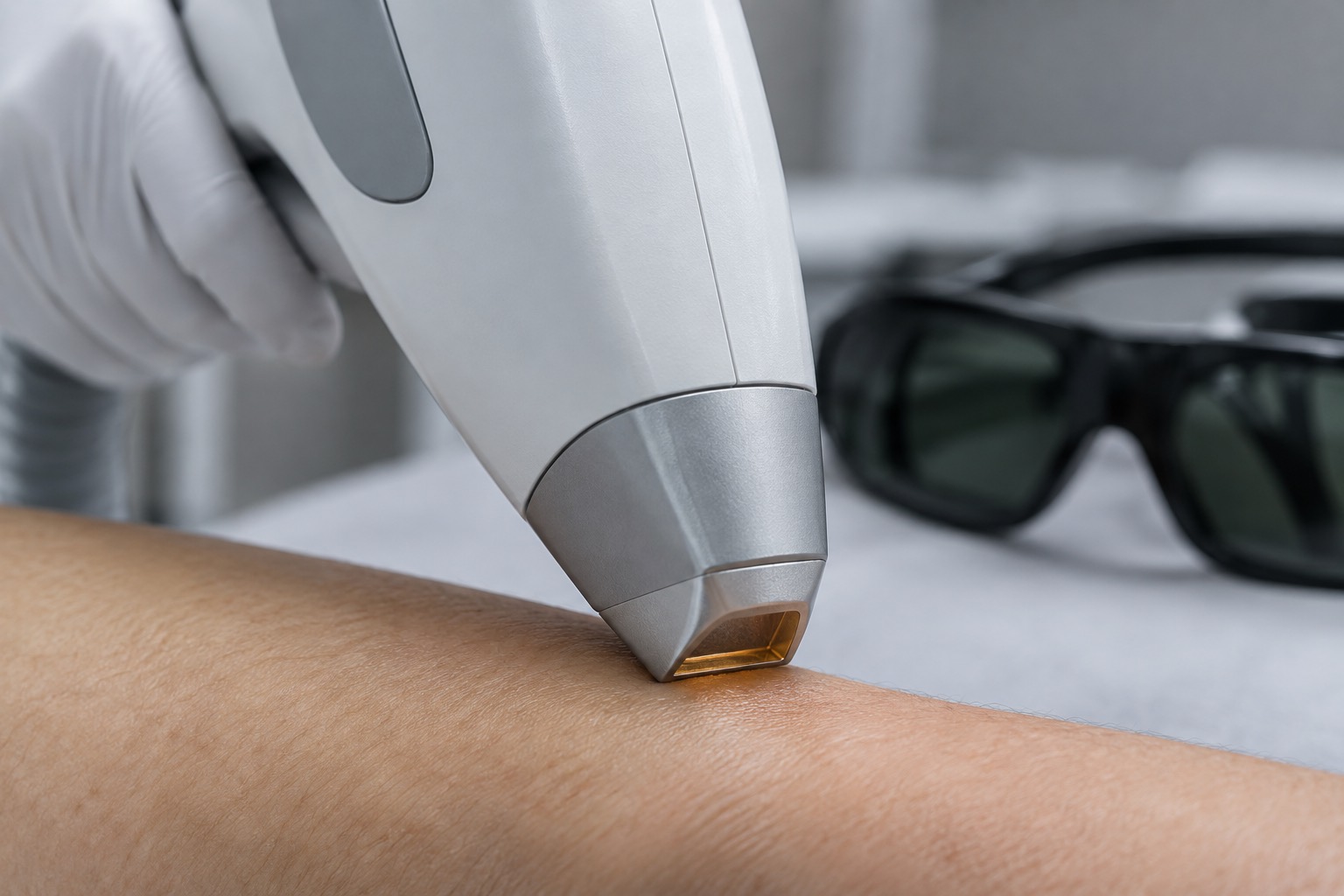
The one-paragraph version
A laser emits light at a wavelength that melanin absorbs strongly. Hair is full of melanin, so the light travels down the shaft, heats it, and the heat damages the follicle and the small blood supply that feeds it. The skin also contains melanin, which is why the wavelength matters so much: the ideal device is absorbed by the hair and largely ignored by the skin. That balance is easy on light skin with dark hair and harder everywhere else, which is the entire reason there are four different devices rather than one.
Why the hair cycle decides the outcome
Hair grows in three phases. Only the anagen phase, when the follicle is actively producing a shaft and is connected to its blood supply, responds to light in a way that produces lasting damage. At any given moment a large share of your hair is in telogen, the resting phase, and light does almost nothing to it.
This is the reason a course of treatment exists. One session catches the follicles that happen to be in anagen that day. Six to eight weeks later the next cohort has moved into anagen, and the second session catches those. A course of six to ten sessions, spaced to match that cycle, is how you reach most of the follicles rather than a fraction of them. Any clinic that offers a single session as a complete treatment is selling you the first sixth of a course.
What the technician is actually adjusting
The device exposes three dials that matter. Fluence is the energy delivered per square centimetre, and it has to be high enough to damage the follicle and low enough not to burn the skin. Pulse duration controls how long that energy is applied, and longer pulses are gentler on skin with more melanin. Spot size changes how deep the light penetrates and how fast the session goes.
A good technician adjusts all three to your skin tone, the area, and how your skin responded last time. A technician who runs every client on the same setting is not treating you, they are operating a machine.
What it feels like, mechanically
The pulse feels like a warm elastic band snapping against the skin, and modern devices blow cold air or run a cooled tip across the skin at the same time, which is why the sensation is shorter than people expect. Areas with denser follicles and thinner skin, such as the upper lip, bikini line and underarms, are more sensitive than the legs or back. Numbing cream is common for a first session and rarely needed after that.
What a laser cannot do
It cannot remove hair permanently in the sense of never returning. It cannot work on hair with no pigment: white, grey and very fine blonde hair absorbs almost none of the light. It cannot treat a hormonal cause, so hair driven by a condition such as PCOS often returns and needs maintenance. And it cannot substitute for a diagnosis: if hair appeared suddenly, spread quickly or came with other symptoms, that is a conversation with a clinician, not a booking.
Where this sits in the rest of the site
If you are choosing a clinic rather than reading up, start with how the treatment works and what drives the price, then compare the markets we cover and what we verify before you book anything.
Device wavelengths and hair-cycle behaviour are standard clinical practice for laser hair reduction. This is not medical advice; decisions about your skin belong with a licensed clinician.