Guide
Laser hair removal for blonde hair
Laser needs pigment in the hair to work, and blonde hair has little. That one fact decides the money you risk on a course, the method that actually fits, and how honest a clinic is being when you call.
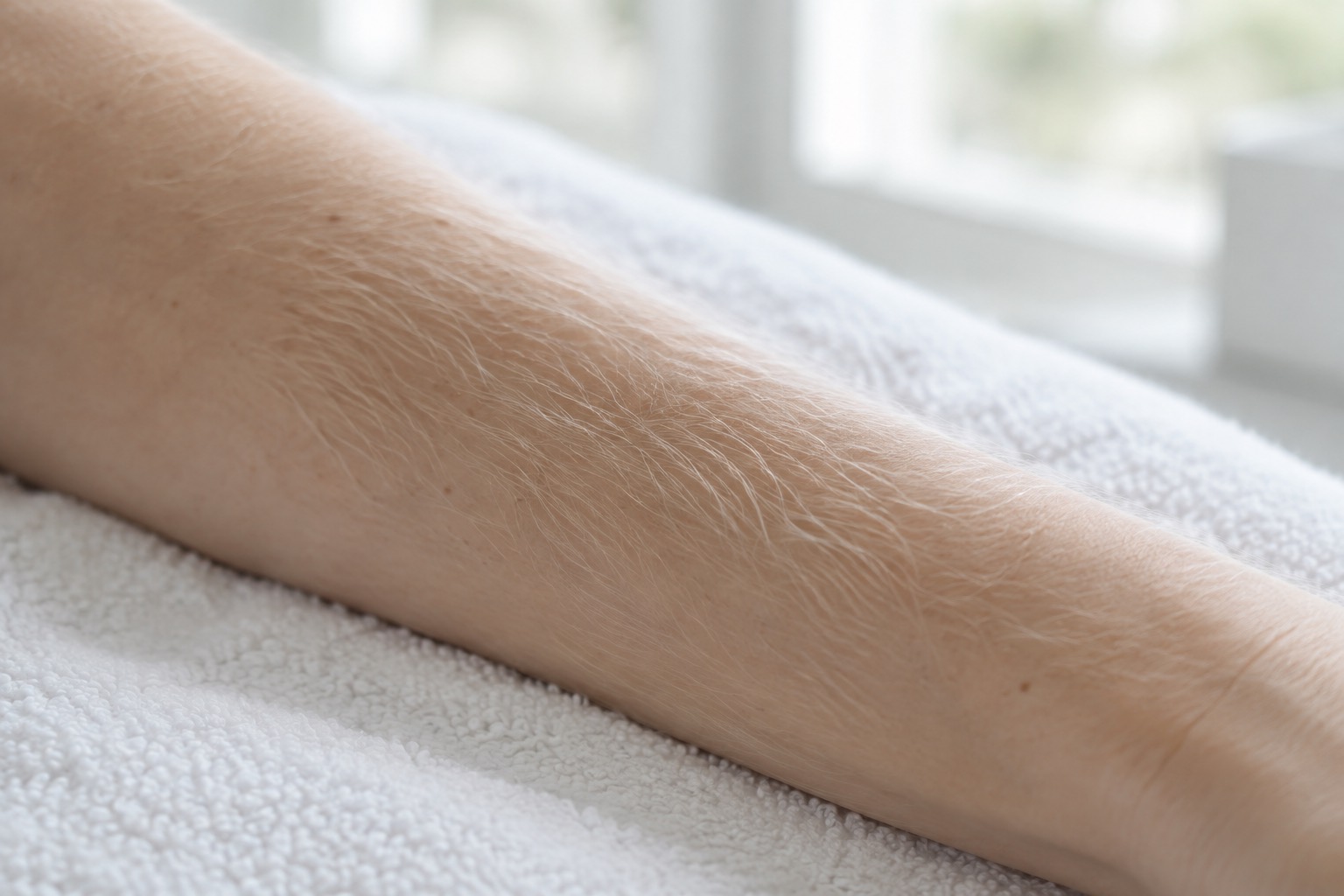
Why blonde hair is the hard case
Laser works by heating melanin. The pulse travels down the hair shaft, the pigment absorbs it, and the heat damages the follicle. Blonde hair contains very little melanin, so most of the light passes through the shaft instead of being absorbed, and the follicle receives far less heat than it would under dark hair. This is not a limitation of one device or one brand. It is the mechanism itself, and no setting changes it.
The range matters. Dark blonde and light brown hair often responds, particularly when the hair is coarse. Platinum, ash blonde, grey and white hair rarely responds at all, and a clinic that promises otherwise is guessing or selling.
What laser can and cannot do, and the comparison that matters
On mid brown and dark blonde hair, a full course can produce a genuine reduction, and with maintenance that result holds for years. On very light blonde hair the honest expectation is little to no change, and the money spent is the money lost. A patch test on a small area, assessed after a few weeks, is the only way to know which group you are in before you pay for a course.
Electrolysis is the comparison that matters here, because it does not use light at all. A probe is inserted into each follicle and destroys it directly, so hair colour is irrelevant. That is why electrolysis is the only route for white and very light blonde hair, and why it is often the sensible route for blonde hair on small areas even where laser would do something.
Cost across a year of use
Laser on blonde hair carries a specific risk: you can pay for a full course and finish with a reduction that does not justify the money. The yearly cost of a laser course behaves like any other, front loaded and then small, but only where the hair responds. Where it does not, the first year is an expensive lesson.
Electrolysis is billed by time, so the yearly figure is set by how much hair you want removed rather than by a package. On a small area such as the upper lip or chin, electrolysis often costs less per year than a laser package bought on hope, because you pay for the minutes you use and you can stop when the hair is gone.
Discomfort and time per session
Laser on low pigment hair is often turned up to compensate, which makes it more uncomfortable without making it more effective. That is a pattern worth recognising: if the technician keeps raising the energy because nothing is happening, the problem is the hair, not the setting. Mild redness that settles is ordinary, and anything more should be checked by a clinician.
Electrolysis feels like a small sting at each follicle, one at a time. A small area can be cleared in a session of minutes, while a large area takes many appointments. Laser covers a patch in one pass and is faster per visit on any area, which is exactly why it is worth a patch test where there is enough pigment to work with.
Who each option suits, and the honest case for electrolysis
Laser suits someone with dark blonde or light brown hair, coarse texture and clear contrast against their skin, who has had a patch test that showed a response. It does not suit platinum, ash or white hair, and more sessions do not fix that. Electrolysis suits everyone else, and it suits small areas on anyone, whatever the hair colour.
The honest case for electrolysis is that it is the only method that does not care about hair colour, so for very light hair it is not a compromise but the correct first choice. The honest case for laser is speed on large areas, where it is far quicker, provided the hair has enough pigment to answer. A clinic that proposes a patch test before selling a course is telling you something useful about how it works. One that sells a course to someone with white hair is telling you something too.
Where this sits in the rest of the site
If you are choosing a clinic rather than reading up, start with how the treatment works and what drives the price, then compare the markets we cover and what we verify before you book anything.
Hair pigment behaviour and method selection reflect standard practice for laser hair reduction and electrolysis. This is not medical advice.