Guide
Does laser hair removal hurt
It feels like a warm elastic band snapping against the skin, once per pulse, and the cooling is what makes it bearable. Whether that counts as painful depends on the area and the device more than on your pain threshold.
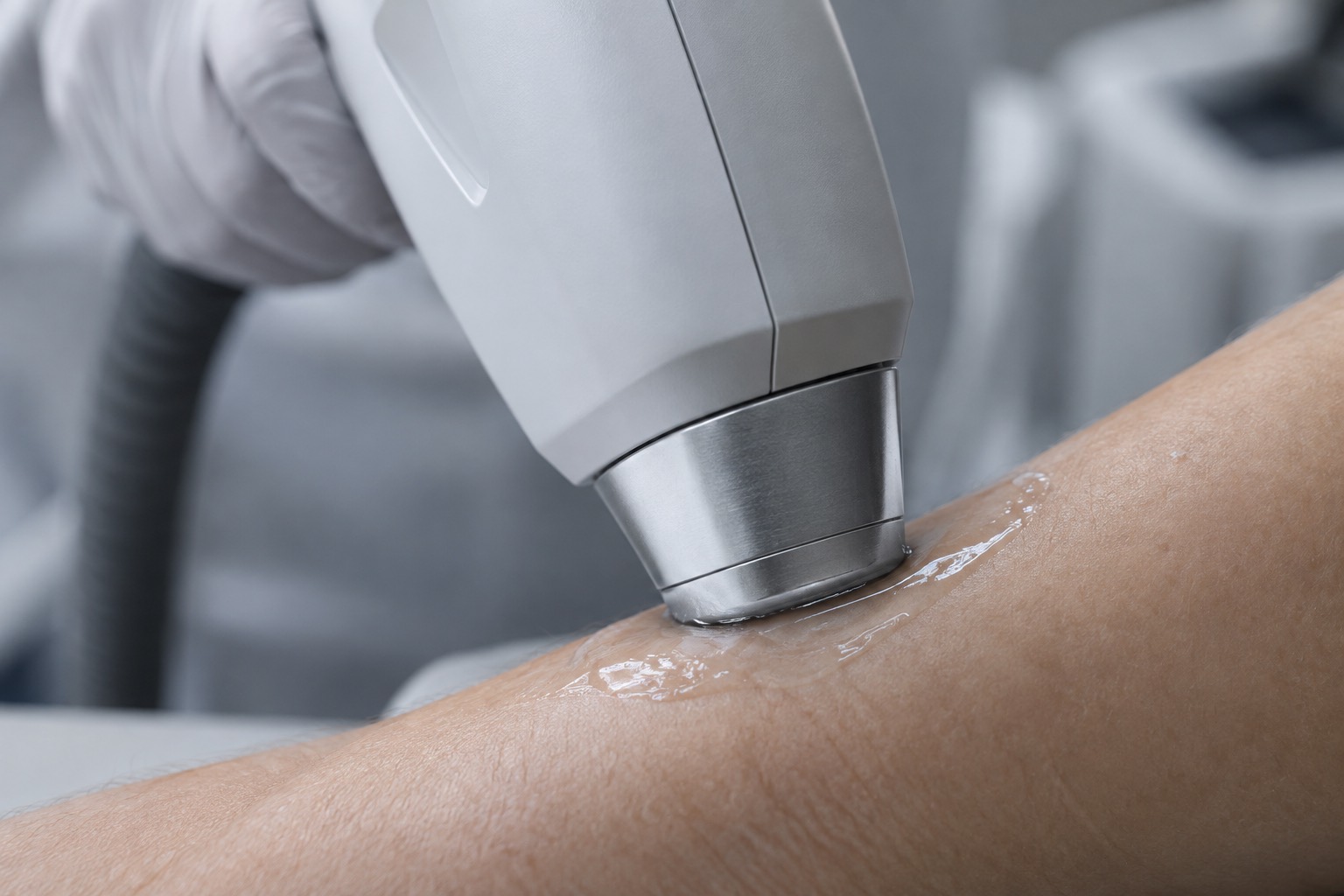
The sensation, precisely
Each pulse lands as a quick hot snap. Between pulses there is nothing except the cold of the handpiece moving across the skin. People who describe it as painful usually mean the first two or three pulses, when they are still bracing, and then the session settles into a rhythm. A full upper lip takes about two minutes. Underarms take around ten. That length matters: a session you can tolerate for two minutes is a different proposition from one you have to sit through for forty, which is why legs are usually described as tedious rather than painful.
Most modern devices run a cooled tip or blow cold air across the skin at the same time as the pulse. The cooling is not a comfort feature bolted on afterwards; it protects the surface of the skin from heat that is meant for the follicle. A clinic that turns the cooling down to speed up a session is trading your skin for their diary.
Why some areas are worse than others
Two things drive it. Thin skin over sensitive nerve endings, and a high density of coarse follicles close together. That combination is why the upper lip, the bikini line and the underarms are consistently rated the most uncomfortable areas, and why the back of the calf, the thigh and the forearm are rated the easiest.
It also follows the hair itself. A dense patch of coarse hair absorbs more energy per square centimetre, which is exactly the point of the treatment and exactly why it stings more. The paradox is worth knowing before your first appointment: the areas that respond best are often the ones that hurt most.
What the clinic controls
Fluence is the energy per pulse, and it is the main dial for both effect and discomfort. Pulse duration spreads that energy over a longer window, which feels gentler and is often used on darker skin tones for exactly that reason. Spot size changes how much area each pulse covers, so a larger spot means fewer pulses and a shorter session. And the cooling, as above, is the difference between a snap and a burn.
This is why the same treatment at two clinics can feel completely different even on identical hardware. Settings are chosen per person, per area, and per session. If your first session was unbearable, the correct response is not to endure it next time, it is to say so, because the settings were probably not adjusted to you.
Numbing cream, honestly
Topical anaesthetic is common for a first bikini or lip session and rarely needed after that, because the hair thins as the course progresses and each session covers less active growth. It has to be applied correctly and in advance to do anything, and clinics differ on whether they provide it or ask you to arrive early with your own.
It is also not risk free. Numbing cream contains an anaesthetic, it should go on intact skin only, and the amount and the time it stays on the skin both matter. If you feel light headed, notice a strange taste, ringing in your ears, or numbness spreading beyond the area you applied it to, tell the clinic and speak to a clinician. Do not treat that at home.
What to do before and during
Sleep and food make more difference than most people expect, and arriving tense with a skipped breakfast makes a ten minute session feel long. Ask about the cooling and the settings before you start rather than midway through. Ask for a break if you want one; a technician would rather pause than have you flinch, because a flinch moves the handpiece and that is when the pulse lands unevenly.
One thing worth saying plainly: the treatment should feel like a snap, not like a burn, and it should not leave you sore in a way that lasts days. If it does, that is information for the clinic and a reason to lower the settings next time, not a reason to accept it as the price of the result.
Where this sits in the rest of the site
If you are choosing a clinic rather than reading up, start with how the treatment works and what drives the price, then compare the markets we cover and what we verify before you book anything.
Sensation and discomfort described here reflect how the devices work and how clinics typically manage a session. This is not medical advice, and anything that feels wrong on your skin belongs with a licensed clinician.