Guide
What a model number tells you
Most treatment menus name a brand and stop there, which tells you almost nothing useful. The wavelength and the model number tell you far more, because those two facts describe what the device can physically do to hair, and what it cannot.
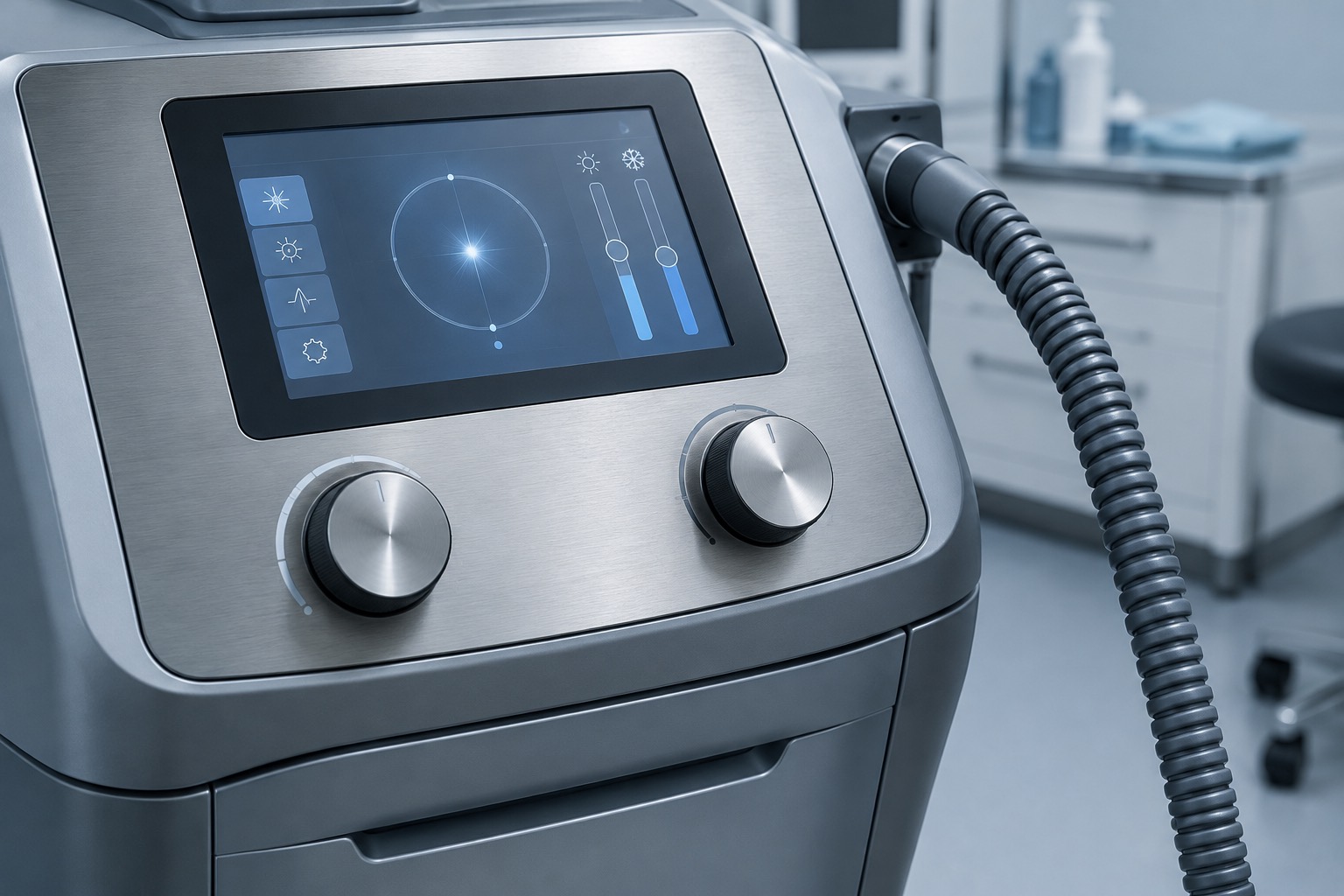
Wavelength is the first fact about any device
Every laser hair removal device works on one principle: emit light at a wavelength that melanin absorbs, let the hair carry that heat down to the follicle, and keep the skin cool enough to walk away undamaged. Four wavelengths do almost all of this work. Alexandrite sits at 755 nanometres, diode at around 810, Nd:YAG at 1064, and ruby at 694.
The number is not a quality rating. It describes how strongly melanin absorbs the light and how deeply it penetrates, and those two properties decide which skin and which hair the device suits. Nor does the number describe power, because power without the right wavelength on the right skin raises the risk without improving the result. A clinic that leads with a brand name and cannot state a wavelength has given you the least informative fact available about its equipment.
What each wavelength suits
Alexandrite at 755 is absorbed strongly by melanin, which makes it efficient on light to medium skin with dark, coarse hair, and fast across large areas. It is also the least forgiving when the skin itself holds much pigment. Ruby at 694 sits in similar territory, older in design and now less common, with the same logic and the same limits.
Diode at around 810 sits slightly off the peak absorption, which costs a little efficiency and buys tolerance, so it stretches across light and medium tones rather than being sharp on one of them. Nd:YAG at 1064 is absorbed least by melanin, which is precisely why it is the usual starting point on deeper skin tones, at the cost of more sessions for the same area.
What a model number actually tells you
Brands sell families of devices, and the family name is shared across generations that behave differently. A model number pins down the generation, the spot size, the cooling method and the pulse options. Those four things decide session length, comfort, and whether the device can treat a full back in a reasonable time or will spend the appointment on one thigh.
So ask for the model, not the make. Then ask what cooling it uses and how large the spot is, because those two answers explain most of the difference in comfort and speed between two clinics quoting for the same area. A newer generation of a modest family often beats an older generation of a famous one, and only the model number shows you that.
Why the same word covers very different machines
Diode is the clearest example. The word describes a wavelength band, not a device, and it is applied to equipment built many years apart with very different power and cooling. Two clinics can both advertise diode treatment and be working with machines that feel nothing alike to lie on, at settings that produce different results for the same number of sessions.
The same is true of alexandrite and of Nd:YAG. The wavelength is a constant; the engineering around it is not. That is why brand comparisons published as rankings tend to be useless to you, and why a photograph of the handpiece and a model number are worth more than a paragraph about which manufacturer is best.
What no model number can tell you
No device tells you who will operate it, how they choose fluence and pulse duration for your skin, or whether they will change the plan when your skin responds differently than expected. The machine cannot tell you whether the clinic treats hair like yours often, or whether you will see the same person across the course.
So use the model number as a filter, then ask the questions it cannot answer. A named model operated by someone with a described protocol is a good sign. A named model used as the headline of a sales page, with no wavelength and no operator detail, is a sign that the equipment is doing the marketing rather than the treatment.
Where this sits in the rest of the site
If you are choosing a clinic rather than reading up, start with how the treatment works and what drives the price, then compare the markets we cover and what we verify before you book anything.
Wavelength ranges and device characteristics reflect general practice in laser hair reduction. Device availability varies by clinic. This is not medical advice.