Guide
Nd:YAG laser hair removal
At 1064 nanometres, Nd:YAG is the wavelength that darker skin tones can be treated with safely. It is also the one that needs the most sessions, because it trades efficiency for safety. Both halves of that sentence matter.
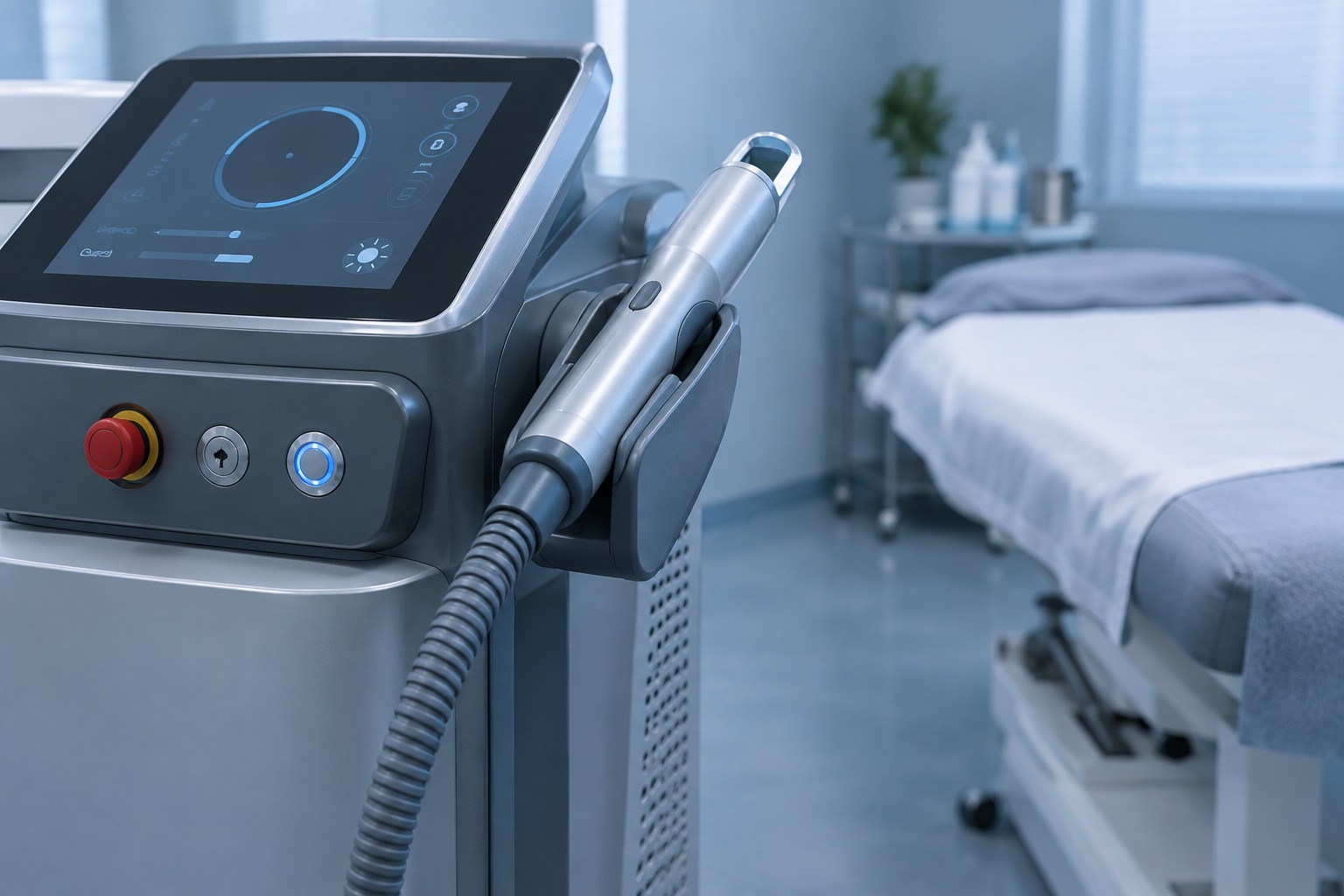
Why 1064 nanometres matters
Melanin absorbs less light at 1064 nanometres than at 755 or 810. On light skin that is a disadvantage, because the target is less absorbing. On darker skin it is the whole point: the light passes through pigment in the epidermis with less heating, and reaches the follicle with a lower risk of the surface burning. That is why Nd:YAG is the default starting device for Fitzpatrick type IV and above in most clinics.
The cost of that safety
Less absorption means less damage per pulse, which means more sessions at settings the skin can tolerate. A course on Nd:YAG often runs eight to twelve rather than six to eight, and the hair that remains tends to be finer rather than gone. Coarse dark hair on very dark skin can respond well; fine hair on the same skin may respond slowly enough that maintenance is the realistic goal.
What a good protocol looks like
Conservative settings on the first session, a check for how the skin settles over the following week, then a step up if the response allows. Long pulse durations rather than short. Cooling is not optional on this wavelength at therapeutic fluence. If a clinic proposes starting at high energy on darker skin, ask what happens if the skin reacts, and listen to whether the answer involves a protocol or a shrug.
Combining wavelengths
Some clinics pair a longer wavelength with a shorter one later in the course, once they have seen the skin tolerate treatment. It can improve the result on hair that the safer wavelength alone is slow to clear. It should be introduced on evidence from your own skin, not as an upsell in the first consultation.
What to ask before you book
Which device model, whether the technician has treated your skin tone before, what the first-session settings will be and why, and what the plan is if your skin hyperpigments. That last question separates clinics that have done this on darker skin from clinics that have read about it.
Where this sits in the rest of the site
If you are choosing a clinic rather than reading up, start with how the treatment works and what drives the price, then compare the markets we cover and what we verify before you book anything.
Wavelength and Fitzpatrick guidance reflect standard clinical practice for laser hair reduction on darker skin tones. This is not medical advice.