Guide
Laser hair removal numbing cream
A topical anaesthetic takes the edge off the surface, and it is also a medicine with a maximum dose and a maximum area. The label and the clinic set both, and more cream is not more comfort.
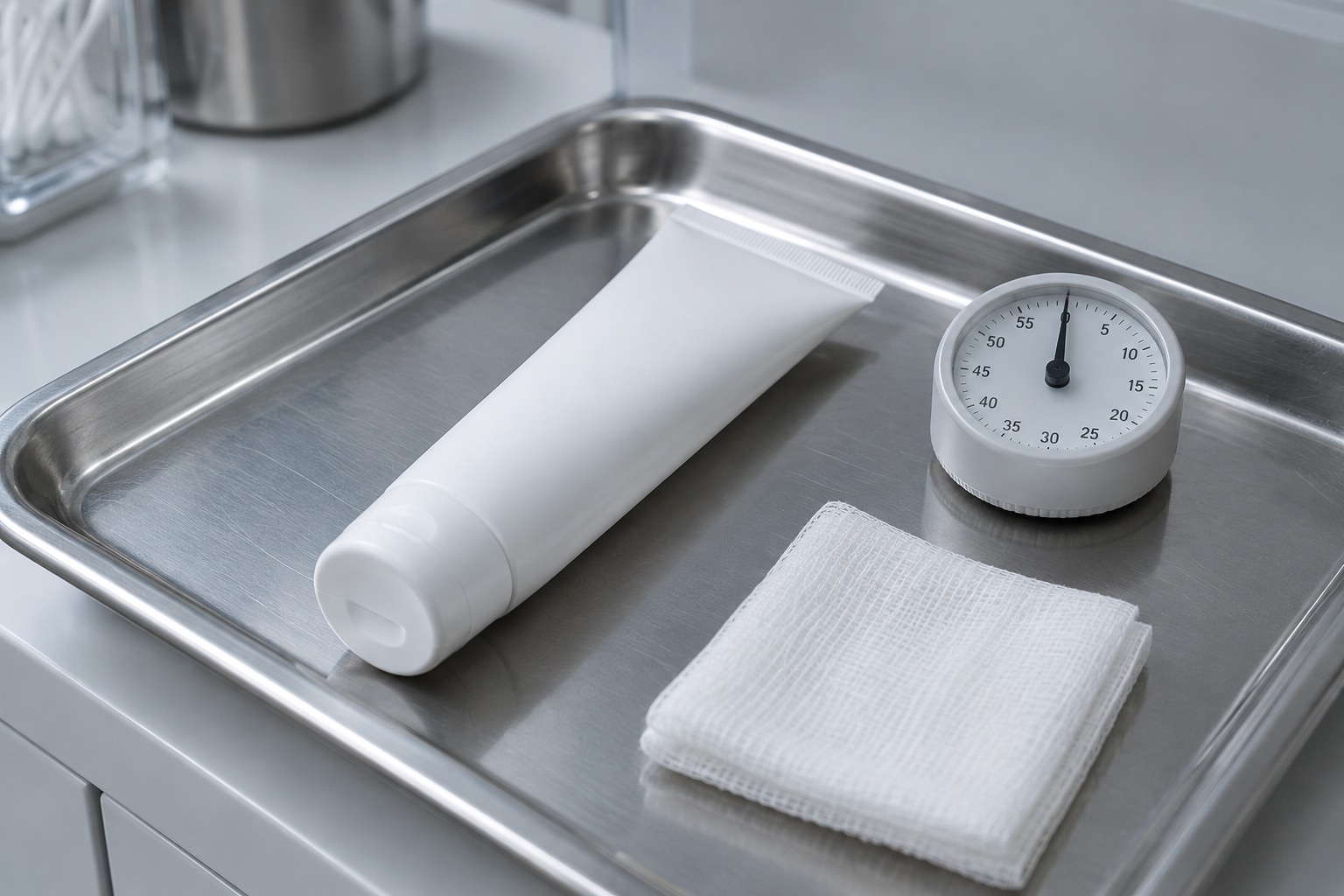
What it does, and what it cannot do
Numbing cream for laser hair removal is a topical anaesthetic, usually lidocaine on its own or lidocaine with prilocaine. Applied to intact skin for a set period, it reduces sensation in the surface layers, which is what makes a bikini line, an upper lip or an underarm easier to sit through.
It does not remove the sensation of heat at the depth where the laser works, and it does not make the treatment safer or more effective. A clinic offering numbing cream for every session is solving a comfort problem, which is reasonable, but it is no substitute for correct settings and an operator who watches the skin. If the cream is being used to get you through settings your skin cannot take, that is the wrong solution to the right complaint.
The risk worth understanding
These are medicines, and the label limits how much can be applied and over what area. Spread thickly across a large area, or covered with an airtight dressing for longer than the instructions allow, more of the drug reaches the bloodstream than intended. That is where the serious reactions come from, and it is why the instructions matter more than the numbing effect.
Use the amount the label and the clinic specify, on intact skin only, and do not extend the time on the skin to chase a stronger effect. If you feel dizzy, notice a metallic taste, ringing in your ears, or numbness spreading beyond the area you treated, tell the clinic and speak to a clinician. Do not drive yourself home if you feel unwell.
Applying it properly
Timing is the part people get wrong. Most products need to sit on the skin for a set period before the session, and the clinic will tell you when to apply it relative to your appointment. Apply a thin, even layer to the area being treated and no further, then wash your hands. Keep it away from the eyes, the lips and any broken skin.
If the clinic supplies the cream, use theirs and follow their instructions rather than a video you found. If you buy your own, check the strength against what the clinic expects and tell them what you used and when. Do not cover the area with plastic wrap unless the product instructions or the clinic say to, because occlusion is exactly what raises absorption.
When you do not need it
Most people do not need numbing cream for legs, arms or back, where the sensation is mild and the session is quick. It is more often used on the upper lip, the bikini line, the underarms and the face, and more often on a first session than on later ones. Tolerance usually improves as the course goes on and as the hair thins.
Ask for a short test pulse without cream if you want to know what the treatment actually feels like. That is a more useful comparison than numbing everything from the first session and never finding out what your own threshold is. If the answer is that you do not know, that is a reason to ask the clinic before the appointment rather than in the chair.
Prescription strengths and patch tests
Some products are prescription only and stronger than anything sold for general use. If a clinic offers one, ask who is supervising its use and what the maximum area is. A patch test on a small area a day before is a reasonable request for anyone using a topical anaesthetic for the first time, and it costs you one appointment you did not need to book.
Say if you have reacted to a topical anaesthetic before, or if you have broken skin, eczema or another condition in the area. Those are questions for the clinic and, where a previous reaction was significant, for a clinician before anything is applied.
Where this sits in the rest of the site
If you are choosing a clinic rather than reading up, start with how the treatment works and what drives the price, then compare the markets we cover and what we verify before you book anything.
This page describes general practice for topical anaesthetics used before laser hair reduction. It is not medical advice; read the product label and speak to a clinician or pharmacist if you are unsure.