Guide
Laser hair removal prep
Most of what decides a good session happens in the weeks before it. Stop waxing, keep shaving, stay out of the sun, and tell the technician what your skin has been doing.
The window that matters most
Two things have to be avoided in the month before a session. Waxing, epilating, plucking and threading all pull the hair out at the root, and the laser needs the shaft in place to carry heat down to the follicle. If the hair is gone, the pulse has nothing to travel along and the session does far less than it should. Shaving is the opposite case: it leaves the root intact, and it is required rather than merely allowed.
Sun exposure and tanning beds are the other exclusion. Pigment in the skin competes with pigment in the hair for the light, and a recent tan raises the risk of a surface burn and usually forces the clinic to lower the settings, which costs you effectiveness. Visible tan lines on the day of treatment are a reason to reschedule rather than treat.
Shaving before a session
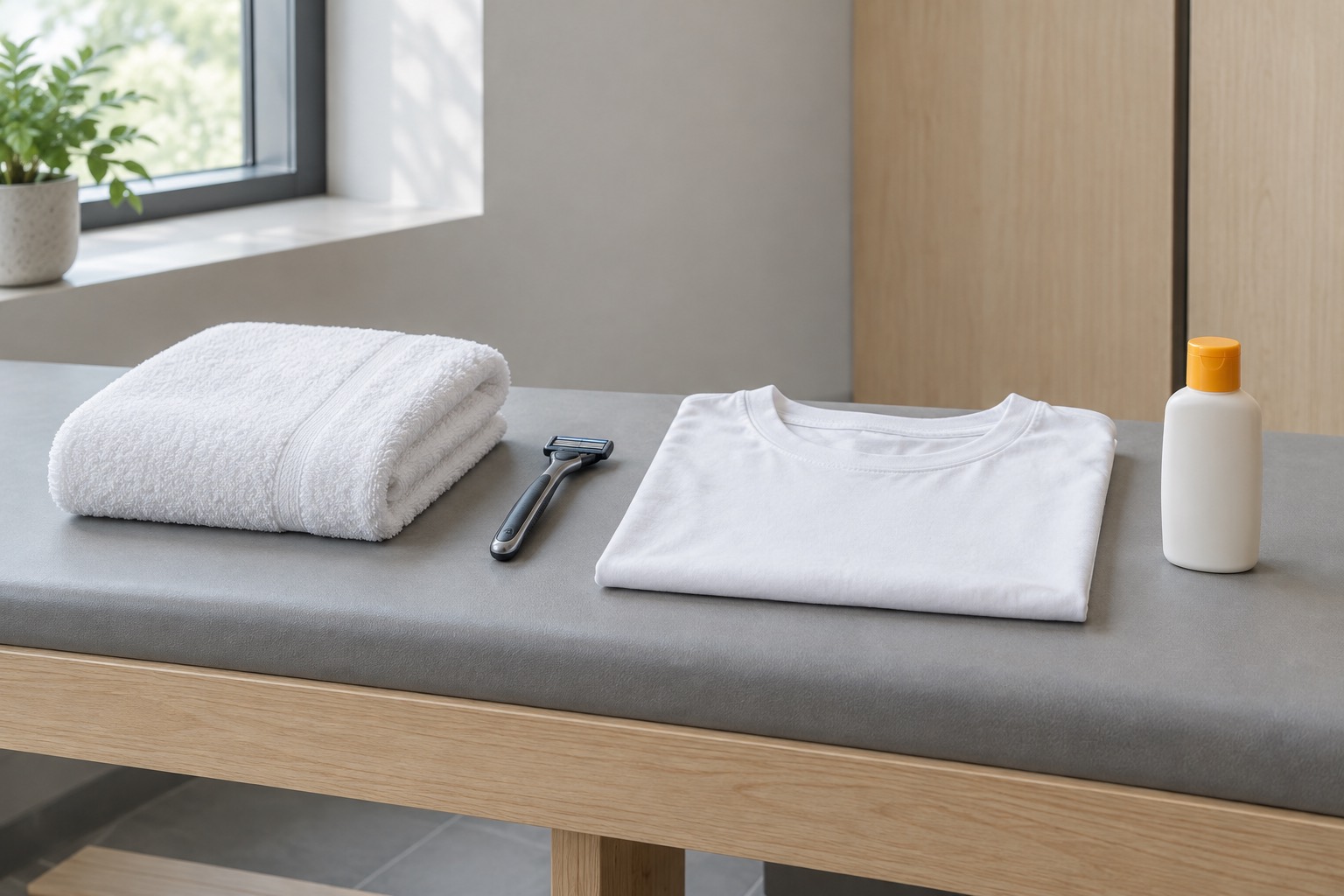
Shave the area the evening before or the morning of, depending on what the clinic asks for. The aim is a close shave with no stubble above the surface, because surface hair absorbs the pulse and heats the skin instead of the follicle. Leave a day between shaving and treatment if your skin tends to be irritated by a razor, so any redness has settled before the technician looks at it.
Do not shave in the car outside. Freshly shaved skin is more reactive, and a small nick is a reason for the clinic to work around the area or postpone it. Use a clean razor, shave with the grain if your skin is sensitive, and skip the scrub and the body lotion on the day itself.
Products and medications
Retinoids, acid exfoliants and strong scrubs make skin more reactive, and many clinics ask you to stop them for a few days before treatment. Ask what they want rather than guessing, and say what you are using, including anything prescribed for acne or pigmentation, because a prescribed product is the one people forget to mention.
Some medications increase sensitivity to light, including a number of antibiotics and acne treatments. Tell the clinic what you take, and if you are unsure whether something matters, ask your prescriber or pharmacist before the appointment. Isotretinoin is something clinics ask about directly, so have the answer ready rather than guessing at dates.
The day of the appointment
Arrive with clean skin on the area. No deodorant on underarms, no lotion, no fake tan, and no numbing cream unless the clinic has told you to use it and how. Loose clothing that leaves the area easy to reach makes the session quicker and keeps fabric off skin that has just been treated.
Expect a patch test or a short test pulse if you have not been treated there before, and expect the first session to run at conservative settings. Bring the date of your last wax, your last significant sun exposure, and any change in medication or hormonal contraception. All three change how the technician sets the device.
What to raise before you are treated
Say if you are pregnant, breastfeeding, or trying to conceive, because many clinics will not treat you while you are pregnant or breastfeeding, and it is better to know that before you pay. Say if you have a history of cold sores and the area is the face, so the clinic can decide whether to treat or refer you to a clinician first. Say if you have keloid scarring, active eczema, psoriasis, or an infection in the area.
None of those is an automatic exclusion, but each one changes the plan, and a clinic that does not ask about them is not assessing you. If you have a skin condition you are unsure about, raise it with a clinician before booking rather than leaving a technician to make that call.
Where this sits in the rest of the site
If you are choosing a clinic rather than reading up, start with how the treatment works and what drives the price, then compare the markets we cover and what we verify before you book anything.
This page describes general preparation practice for laser hair reduction. It is not medical advice; decisions about your skin belong with a licensed clinician.