Guide
Laser hair removal on tanned skin
Tanned skin can be treated, but not on the settings a clinic would have used on your natural tone. The practical answer is usually to wait, and to say something if you have been in the sun.
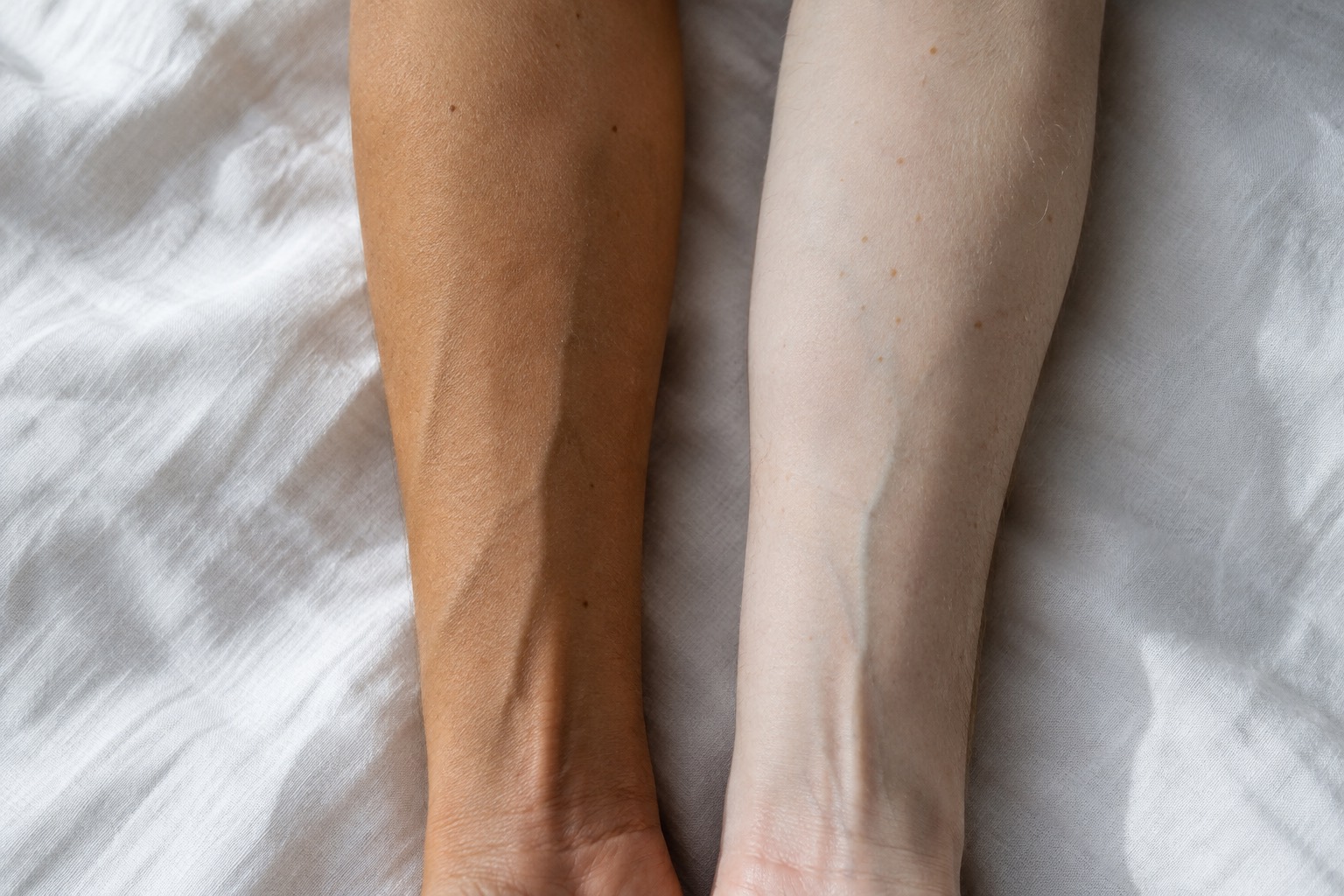
What a tan does to the settings
A tan raises the amount of melanin in the skin, and melanin is the target the laser is aiming at. When there is more of it in the surface layer, more of the pulse is absorbed before it reaches the follicle. The result is a treatment that delivers less useful energy to the hair and more unwanted heat to the skin, and the second half of that sentence is the part that matters.
Clinics respond by lowering fluence, which is the energy per square centimetre, and by choosing a longer pulse duration so the heat arrives more slowly. Both changes reduce risk and both reduce effect. You are not being handled by a worse clinic. You are getting a compromise the clinic has to make once your skin is darker than the settings were designed for.
Why the wait exists
The usual instruction is two weeks clear of sun before and after a session. That is not arbitrary caution. Recently tanned skin is still actively producing pigment, and skin that is still changing is skin a technician cannot reliably assess. Settings chosen on Monday may be wrong by Thursday, because the tan is still deepening or still fading and nobody can see which.
There is a second reason, and it is the more important one. Skin that has been tanned and then treated has a higher chance of pigment change afterwards, in the form of darker or lighter patches that can persist for months. That risk is a conversation to have with a clinician before treatment, never something to manage afterwards with a cream from a pharmacy shelf.
Contrast is the mechanism
Every laser hair treatment depends on contrast between hair and skin. Dark coarse hair against pale skin is the easy case, because the light sees a strong target and a weak background. A tan narrows that gap from the skin side, so the device has less room to work with, whatever wavelength it uses. Contrast is the single variable that best predicts how a course will go, and sun exposure is the part of it you control.
This is why a tan matters more for some people than others. If your hair is very dark and your skin is naturally light, a light tan narrows the margin but leaves some. If your skin is already medium or dark, the margin was smaller to begin with and a tan can close it. Device choice matters here too: a longer wavelength is absorbed less by surface pigment and is usually the safer starting point on darker skin.
Self tanning products and bronzer
A fake tan is not melanin, but it does sit on the surface, and it changes how the skin looks and how it takes up light. Clinics commonly ask clients to stop self tanning a week or two before a session and to arrive with clean skin. Bronzer and body makeup should come off entirely, because a technician cannot judge settings through a layer of product, and a dark streak on a pale leg tells them nothing useful.
If you arrive with a fresh fake tan, expect to be rescheduled or treated at settings that do less. It is not a comment on the product. It is that the clinic cannot tell a tan that will fade in five days from one that will sit there for two weeks, and guessing at settings is how skin gets overheated.
Booking around a holiday
The simplest approach is to plan backwards from the trip. If you are away in June, book the last session for mid May at the latest and the next one for the second half of June, so both fall outside the two week window. Courses run four to six weeks apart, so this usually fits without much effort, but it has to be decided when you start rather than in the week you fly.
If a holiday has already happened and the appointment is close, move the appointment. That is a routine request and clinics handle it constantly, and a clinic that makes it difficult is one to think twice about. What is also worth noticing is a clinic that never asks about sun at all, because the question it skips is a fair indication of the questions it skips elsewhere.
Where this sits in the rest of the site
If you are choosing a clinic rather than reading up, start with how the treatment works and what drives the price, then compare the markets we cover and what we verify before you book anything.
Setting adjustments for tanned skin reflect general practice in laser hair reduction. This is not medical advice; ask a licensed clinician about your own skin.