Guide
Laser hair removal versus electrolysis
One destroys the follicle with a probe, one damages it with light. That single difference explains the cost, the discomfort, the session length, and why electrolysis works on hair that a laser cannot touch.
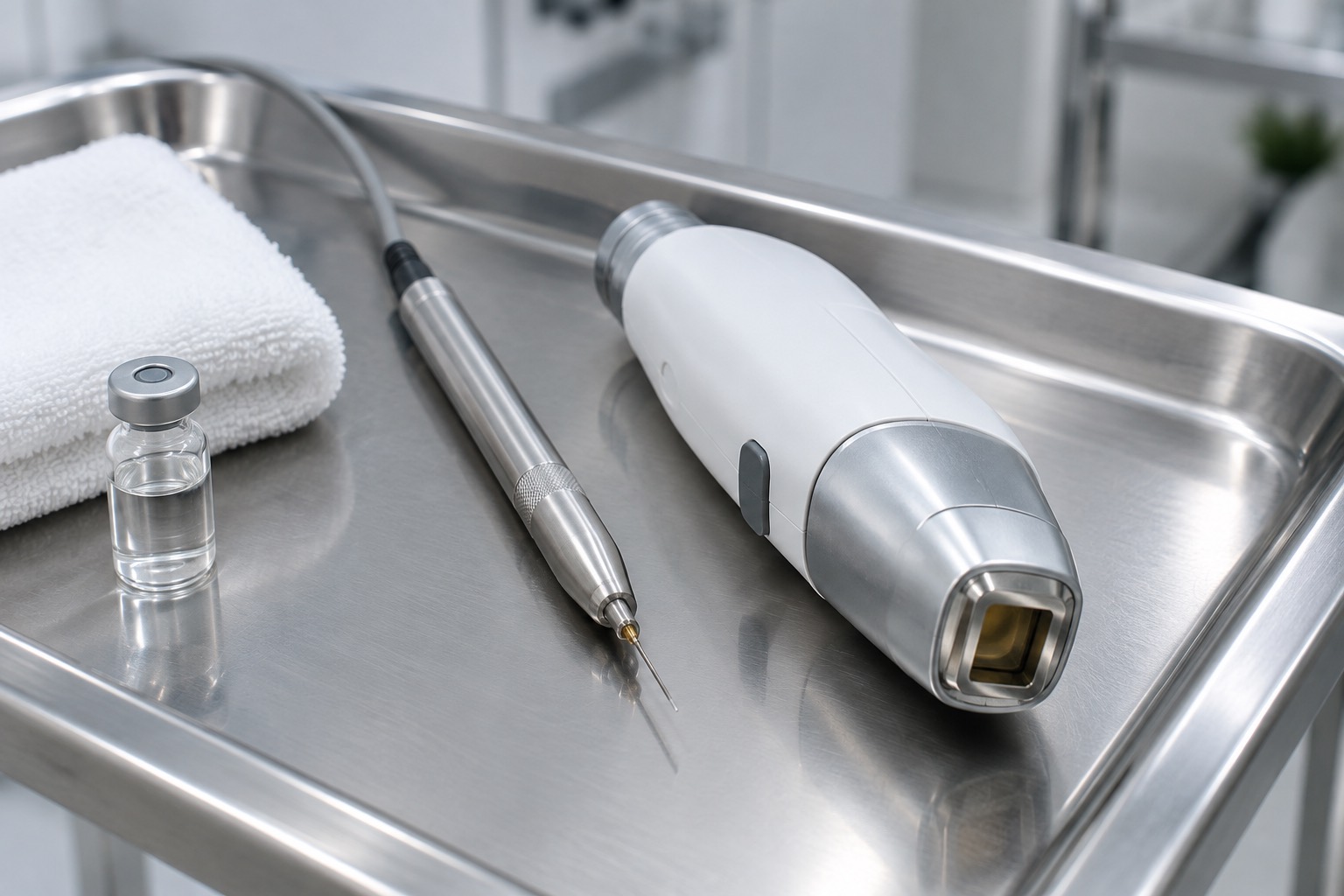
The difference in one paragraph
Electrolysis inserts a fine probe into a single follicle and delivers current that destroys the follicle itself. Laser sends a pulse of light into a patch of skin, where pigment in the hair absorbs it and heat damages the follicle underneath. Electrolysis works follicle by follicle and works on any hair colour, including white and grey. Laser depends on pigment in the hair, so it needs dark hair to work well, and it treats many follicles in one pass.
Cost across a year of use
Electrolysis is billed by time, because the work is measured in follicles. A small area such as the upper lip is finished in a handful of short appointments, but a large area such as the back is measured in many hours, and the yearly cost for that area is the highest of any option here. Laser is billed by area and by session, so the first year carries the course and later years carry only occasional top ups.
Over a single year of use, laser usually costs less for a large area, and electrolysis sometimes costs less for a very small one, because a short electrolysis appointment can be cheaper than a laser session sold inside a package. The comparison only becomes clear when you ask what each method costs in year two, which is the year nobody quotes for.
Permanence and how each one feels
Electrolysis is the only approach here that aims at permanent removal, because it destroys each follicle directly rather than damaging it. That does not mean one pass. Hair grows in cycles, so the same area is treated repeatedly until every follicle has been caught in its growth phase. Laser produces a large reduction that most people hold with occasional sessions, and hair that was damaged rather than destroyed can return over years.
Discomfort differs in kind. Electrolysis feels like a small sting at each follicle and the area can stay tender afterwards, because every insertion is a tiny wound. Laser feels like a warm snap across a patch of skin, and the sensation stops when the pulse stops. Redness, swelling or pigment change are possible with either method, and anything beyond mild short lived redness belongs in a conversation with a clinician.
Time per session, and time in total
A laser session on the upper lip takes a few minutes, and a full back takes the better part of an hour. Electrolysis on the upper lip takes several minutes per appointment, and a full back can take many hours spread across many visits. The difference is not the length of a single appointment, it is the number of appointments. Laser front loads the work into a short course of longer sessions; electrolysis spreads it into a long series of short ones, which suits people who can attend regularly and cannot pay for a whole course at once.
Who each option suits, and the honest case for the other
Laser suits someone with dark hair and light to medium skin who wants a large area cleared in the fewest appointments and is content with a large reduction plus maintenance. Electrolysis suits someone with white, grey, red or very light blonde hair, someone treating a small area such as the upper lip or eyebrows, and anyone who wants a method aimed at permanent removal rather than reduction.
The honest case for electrolysis is not only hair colour. It is the only route for hair with almost no pigment, and it does not care about skin tone, so for many people it is not the second choice but the only workable one. The honest case for laser is scale: if you want your legs or back done and your hair is dark, electrolysis is measured in years of appointments and laser is measured in months, and no amount of patience makes an hourly method competitive on a large area.
Where this sits in the rest of the site
If you are choosing a clinic rather than reading up, start with how the treatment works and what drives the price, then compare the markets we cover and what we verify before you book anything.
Mechanism, session structure and hair colour behaviour reflect standard practice for laser hair reduction and electrolysis. This is not medical advice.