Guide
Laser hair removal versus waxing
Waxing removes hair, laser reduces the follicle that makes it. One is a routine you repeat indefinitely, the other is a course you finish. The real comparison is how many years you plan to keep doing this.
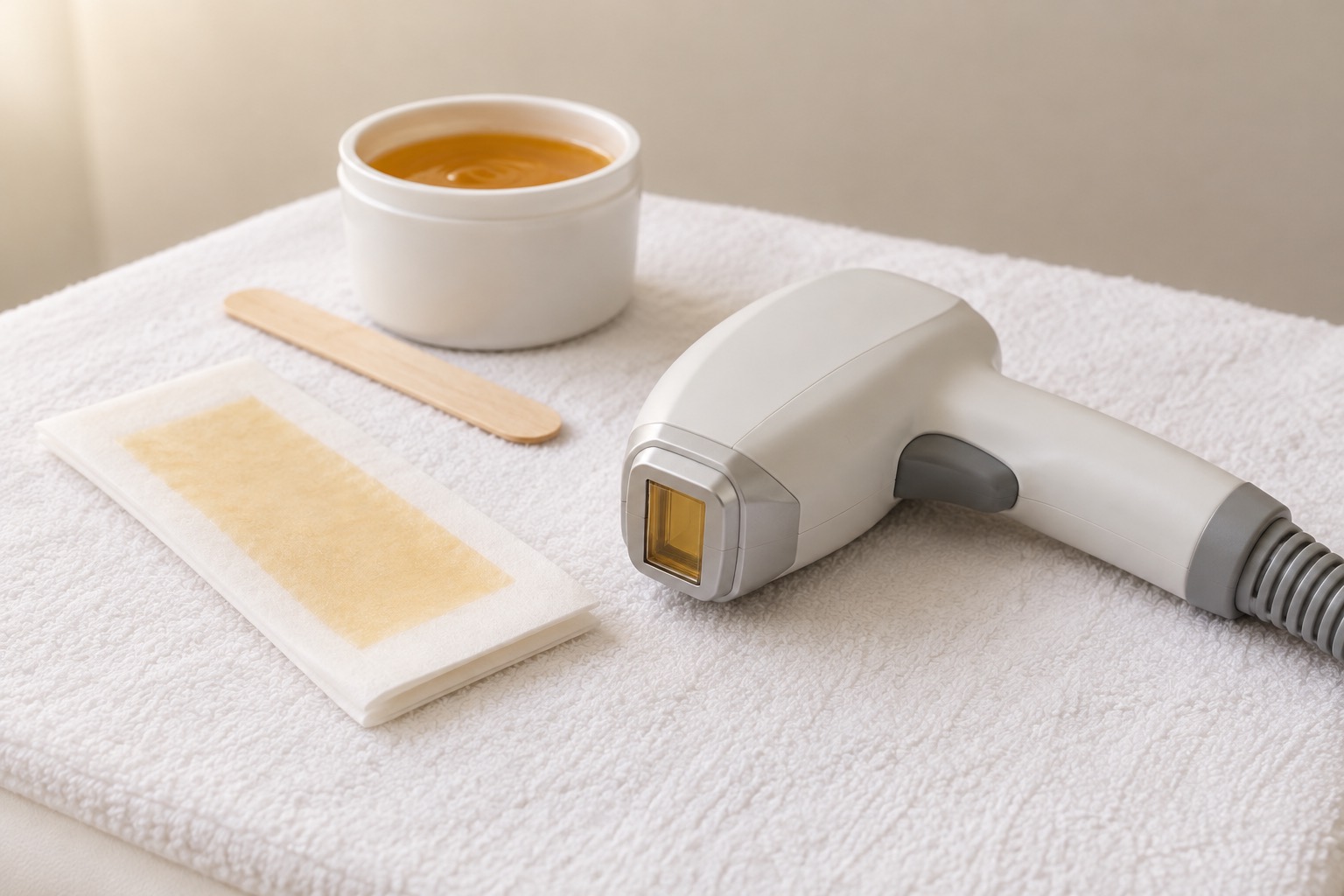
The difference in one paragraph
Waxing pulls hair out at the root, from a follicle that stays intact and grows the next hair on schedule. Laser sends light into the skin, where pigment in the hair absorbs it and heat damages the follicle underneath, so regrowth comes back finer, slower and often absent. Waxing gives an instant result that lasts weeks and needs no pigment in the hair at all. Laser gives a result that takes months to build and depends on dark hair against lighter skin.
Cost across a year of use
Waxing is billed per appointment and the appointments never stop, so the yearly figure stays roughly constant for as long as you keep going. Laser front loads the cost into a course in the first year, then falls to a much smaller annual figure for top ups, if you need them. Over one year laser usually costs more, and over several years the position reverses on a large area.
The crossover point is the only number worth working out, and it depends on how long you intend to keep waxing. Someone who has waxed for a decade has already spent the equivalent of a course. Someone planning another two years of waxing has not, and would lose money by switching now. That is the whole of the cost argument, and it is why the answer changes with age and patience rather than with the price list.
Permanence, which for waxing means regrowth
Waxing is not permanent and does not become permanent with repetition. Hair returns on its own cycle, and some people find that regrowth looks softer over years of waxing, which is a cosmetic effect rather than a change to the follicle. Laser produces a large reduction in hair count after a full course, and the hair that remains is usually finer. Most people need occasional maintenance to hold that reduction, and hormonal change can bring hair back in areas that were clear.
Neither option is permanent in the sense of never returning. Only laser changes the follicle itself, which is why the two do not converge no matter how long you wax.
Discomfort, and the days after
Waxing is brief and sharp. The strip comes off and the worst of it is over in a second, though the skin can stay sensitive for a day and ingrown hairs are common where hair is coarse. Laser is a series of warm snaps across the area, longer in duration than a wax pull and less intense at any single point, with redness that usually settles quickly.
Numbing cream is sometimes offered for a first laser session and rarely needed after that. With waxing the pull is too brief for a numbing cream to do much, which is why most people simply take the few seconds and move on. Both methods can leave skin irritated, and a history of bad reactions to either is worth raising with a clinician before booking.
Time per session, and who each one suits
A wax appointment on the legs takes a fraction of an hour. A laser session on the same area takes longer, but the wax appointment returns every few weeks for as long as you keep waxing, while the laser course ends. Across a year the time commitment is comparable; across five years laser is far lower.
The honest case for waxing is real. It works on every hair colour, needs no course, and can be started this afternoon. It suits someone who wants a result for a holiday, someone with very light hair that laser cannot treat, and anyone unwilling to commit to a series of appointments. Laser suits someone with dark hair who is tired of the cycle and wants to stop booking wax appointments at all.
The honest case for laser is not comfort, it is arithmetic: fewer appointments per year, for as long as you keep going. The honest case for waxing is that it asks nothing of your hair colour and nothing of your calendar beyond the next few weeks.
Where this sits in the rest of the site
If you are choosing a clinic rather than reading up, start with how the treatment works and what drives the price, then compare the markets we cover and what we verify before you book anything.
Mechanism and regrowth behaviour described here reflect standard practice for waxing and laser hair reduction. This is not medical advice.