Guide
Why laser hair removal did not work
When a course under delivers there is usually a specific cause, and most of them are diagnosable from the session records: the wavelength, the settings, the spacing, the hair, or a hormonal driver nobody asked about.
Start with the records, not the reviews
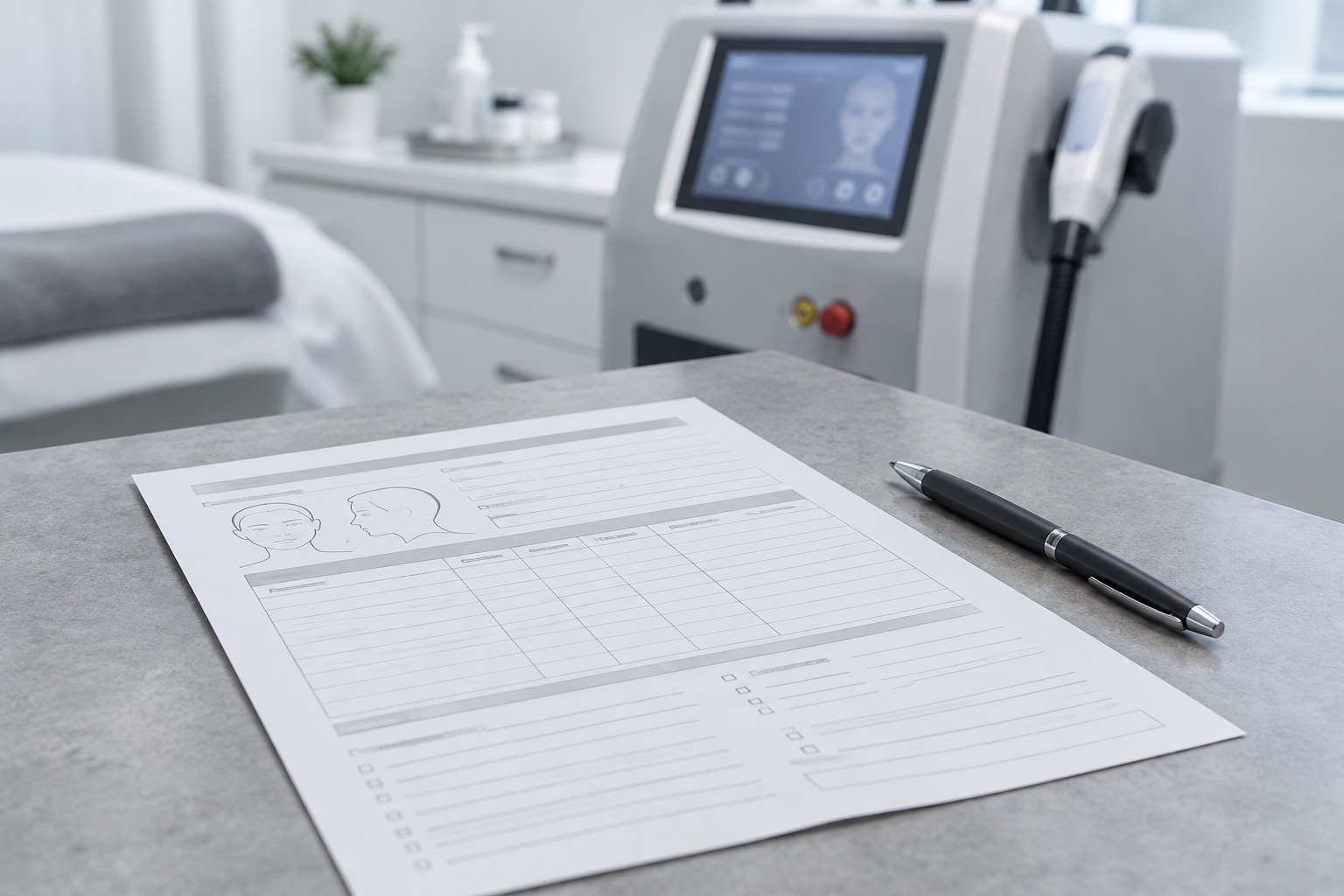
A clinic keeps a record of every session: the device, the settings, the area treated and how it was tolerated. Ask for it. That document turns a vague disappointment into a set of facts you can act on, and any clinic that will not share what it did to your skin is telling you something about how it operates.
With those records in hand, one of the causes below will usually fit. The good news is that most of them are fixable in the next course rather than evidence that the method does not work on you.
The wavelength did not match your skin and hair
Four wavelength families cover most hair removal devices, and they differ in how strongly pigment absorbs them. A device chosen for speed on light skin can be the wrong instrument on a darker tone at the same energy, because the skin competes with the hair for the light. If your skin is darker and the clinic only runs one device, that is a plausible explanation for a poor result before anything else is considered.
The reverse also happens. Fine, light hair on any skin gives the laser very little pigment to absorb, and no setting fixes a target that is barely there.
The settings were too conservative, or never changed
Settings can be lowered for good reasons: darker skin, a recent tan, a sensitive area, or anxiety. But if every session used the same conservative settings, and your skin tolerated them comfortably, the course may simply not have delivered enough energy to damage follicles. Improvement should be visible in the shedding after each session. If nothing sheds, ask why the energy was not increased.
Ask specifically whether the fluence changed between sessions, and what it changed to. That is a factual question with a factual answer in the record.
The spacing did not match the cycle
Sessions catch follicles in the growth phase. Spread them too far apart and the cohort that was ready has partly moved on; bunch them together and you re treat the same cohort while missing the ones that were resting. Four to six weeks is the working window for most areas. A course that drifted to ten weeks between appointments, for whatever reason, will under perform even with perfect technique.
This is the most common self inflicted cause, and the least comfortable to admit: missed appointments cost results, not just time.
Something is driving the hair
Hair on the chin, jaw, upper lip, chest and abdomen can be driven by hormones rather than by local follicle behaviour. When that is the case, the laser reduces what is there and the driver replaces it, which is why some areas need ongoing treatment rather than a finished course. Nobody should be diagnosing that in a clinic corridor, and it is worth raising with a doctor rather than with the person holding the handpiece.
The same applies after a pregnancy, a change in contraception, or a change in thyroid treatment. None of those are failures of the laser; they are the body doing something the laser was never intended to stop.
What to do next
Get the records, ask which device and which settings were used, ask how the fluence changed across the course, and ask what the clinic thinks the cause was. If the answers are vague, get a second opinion from a clinic that runs a different device, and ask them the same questions about your skin tone and hair before booking anything.
Do not buy a second package from the same clinic on the same protocol to see whether it works this time. If the first course did not produce a shed, the second will not either, and the diagnosis is the missing step rather than the treatment.
Where this sits in the rest of the site
If you are choosing a clinic rather than reading up, start with how the treatment works and what drives the price, then compare the markets we cover and what we verify before you book anything.
The causes described are the ones that explain most under performing courses, in general practice. This is not medical advice, and a hormonal cause is a question for a doctor rather than for a clinic.